Multiplication Chart 1-20
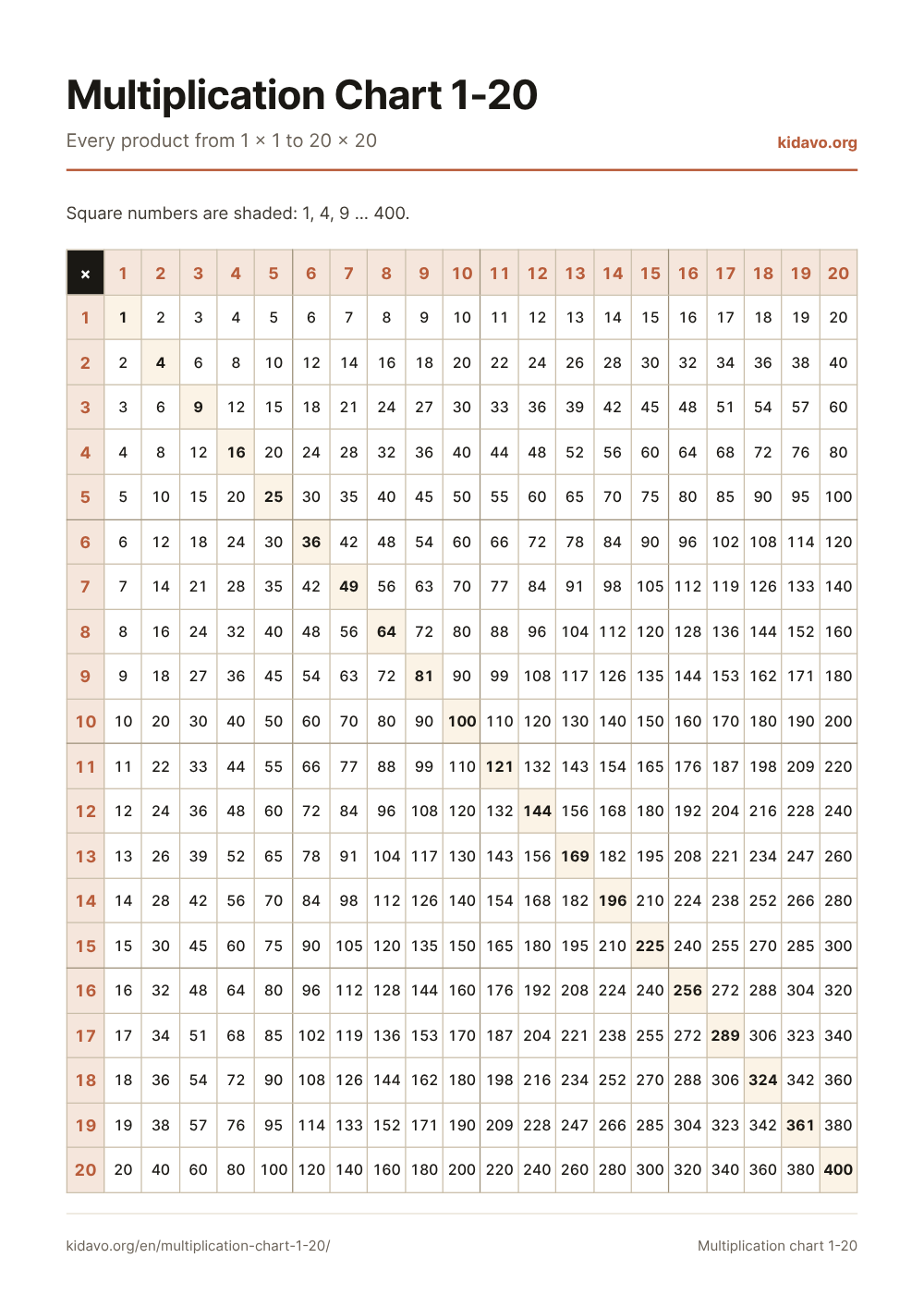
This multiplication chart goes all the way to 20 × 20 = 400. Look up any fact where a row meets a column, print the chart or the blank version as an A4 PDF, and learn the few strategies that turn the 11 to 20 times tables into facts you already know.
Multiplication chart 1 to 20
Each row is one times table. To find 14 × 6, go along row 14 to column 6: 84. Tap a cell to highlight its row and column. On a phone, swipe the chart sideways; the first column stays in place.
| × | 1 | 2 | 3 | 4 | 5 | 6 | 7 | 8 | 9 | 10 | 11 | 12 | 13 | 14 | 15 | 16 | 17 | 18 | 19 | 20 |
|---|---|---|---|---|---|---|---|---|---|---|---|---|---|---|---|---|---|---|---|---|
| 1 | 1 | 2 | 3 | 4 | 5 | 6 | 7 | 8 | 9 | 10 | 11 | 12 | 13 | 14 | 15 | 16 | 17 | 18 | 19 | 20 |
| 2 | 2 | 4 | 6 | 8 | 10 | 12 | 14 | 16 | 18 | 20 | 22 | 24 | 26 | 28 | 30 | 32 | 34 | 36 | 38 | 40 |
| 3 | 3 | 6 | 9 | 12 | 15 | 18 | 21 | 24 | 27 | 30 | 33 | 36 | 39 | 42 | 45 | 48 | 51 | 54 | 57 | 60 |
| 4 | 4 | 8 | 12 | 16 | 20 | 24 | 28 | 32 | 36 | 40 | 44 | 48 | 52 | 56 | 60 | 64 | 68 | 72 | 76 | 80 |
| 5 | 5 | 10 | 15 | 20 | 25 | 30 | 35 | 40 | 45 | 50 | 55 | 60 | 65 | 70 | 75 | 80 | 85 | 90 | 95 | 100 |
| 6 | 6 | 12 | 18 | 24 | 30 | 36 | 42 | 48 | 54 | 60 | 66 | 72 | 78 | 84 | 90 | 96 | 102 | 108 | 114 | 120 |
| 7 | 7 | 14 | 21 | 28 | 35 | 42 | 49 | 56 | 63 | 70 | 77 | 84 | 91 | 98 | 105 | 112 | 119 | 126 | 133 | 140 |
| 8 | 8 | 16 | 24 | 32 | 40 | 48 | 56 | 64 | 72 | 80 | 88 | 96 | 104 | 112 | 120 | 128 | 136 | 144 | 152 | 160 |
| 9 | 9 | 18 | 27 | 36 | 45 | 54 | 63 | 72 | 81 | 90 | 99 | 108 | 117 | 126 | 135 | 144 | 153 | 162 | 171 | 180 |
| 10 | 10 | 20 | 30 | 40 | 50 | 60 | 70 | 80 | 90 | 100 | 110 | 120 | 130 | 140 | 150 | 160 | 170 | 180 | 190 | 200 |
| 11 | 11 | 22 | 33 | 44 | 55 | 66 | 77 | 88 | 99 | 110 | 121 | 132 | 143 | 154 | 165 | 176 | 187 | 198 | 209 | 220 |
| 12 | 12 | 24 | 36 | 48 | 60 | 72 | 84 | 96 | 108 | 120 | 132 | 144 | 156 | 168 | 180 | 192 | 204 | 216 | 228 | 240 |
| 13 | 13 | 26 | 39 | 52 | 65 | 78 | 91 | 104 | 117 | 130 | 143 | 156 | 169 | 182 | 195 | 208 | 221 | 234 | 247 | 260 |
| 14 | 14 | 28 | 42 | 56 | 70 | 84 | 98 | 112 | 126 | 140 | 154 | 168 | 182 | 196 | 210 | 224 | 238 | 252 | 266 | 280 |
| 15 | 15 | 30 | 45 | 60 | 75 | 90 | 105 | 120 | 135 | 150 | 165 | 180 | 195 | 210 | 225 | 240 | 255 | 270 | 285 | 300 |
| 16 | 16 | 32 | 48 | 64 | 80 | 96 | 112 | 128 | 144 | 160 | 176 | 192 | 208 | 224 | 240 | 256 | 272 | 288 | 304 | 320 |
| 17 | 17 | 34 | 51 | 68 | 85 | 102 | 119 | 136 | 153 | 170 | 187 | 204 | 221 | 238 | 255 | 272 | 289 | 306 | 323 | 340 |
| 18 | 18 | 36 | 54 | 72 | 90 | 108 | 126 | 144 | 162 | 180 | 198 | 216 | 234 | 252 | 270 | 288 | 306 | 324 | 342 | 360 |
| 19 | 19 | 38 | 57 | 76 | 95 | 114 | 133 | 152 | 171 | 190 | 209 | 228 | 247 | 266 | 285 | 304 | 323 | 342 | 361 | 380 |
| 20 | 20 | 40 | 60 | 80 | 100 | 120 | 140 | 160 | 180 | 200 | 220 | 240 | 260 | 280 | 300 | 320 | 340 | 360 | 380 | 400 |
Tap a cell in the chart.
How to work out the 11 to 20 times tables
Nobody needs to memorize 400 facts. Every fact with a factor from 11 to 20 can be built from the 1 to 10 tables in one or two steps:
- Split off the ten: 13 × 7 = 10 × 7 + 3 × 7 = 70 + 21 = 91. This works for every number from 11 to 19.
- Double a smaller table: 14 is 2 × 7, 16 is 2 × 8 and 18 is 2 × 9. So 16 × 6 = 2 × 48 = 96.
- Count back from 20: 19 × 8 = 20 × 8 − 8 = 160 − 8 = 152, and 18 × 8 = 160 − 16 = 144.
- Use the 11 pattern: 11 × 7 = 77. For 11 × 12, pull the digits 1 and 2 apart and write their sum in the middle: 132.
- Turn the fact around: 6 × 17 is the same as 17 × 6 = 102, so you only need one of the two.
- Use square numbers as anchors: 12 × 12 = 144, 15 × 15 = 225, 20 × 20 = 400.
Two larger examples
16 × 15
- 16 × 10 = 160.
- 16 × 5 = 80, half of 160.
- 160 + 80 = 240.
Answer: 16 × 15 = 240
19 × 14
- 20 × 14 = 280.
- Take away one 14: 280 − 14 = 266.
Answer: 19 × 14 = 266
The 11 to 20 times tables
Facts from × 1 to × 10 for each table. Open a table for its own trick, the facts up to × 12 and a quick quiz.
11 times table
- 11 × 1 = 11
- 11 × 2 = 22
- 11 × 3 = 33
- 11 × 4 = 44
- 11 × 5 = 55
- 11 × 6 = 66
- 11 × 7 = 77
- 11 × 8 = 88
- 11 × 9 = 99
- 11 × 10 = 110
Up to 11 × 9 the digit just repeats: 11 × 7 = 77. Then 11 × 10 = 110, 11 × 11 = 121, 11 × 12 = 132.
12 times table
- 12 × 1 = 12
- 12 × 2 = 24
- 12 × 3 = 36
- 12 × 4 = 48
- 12 × 5 = 60
- 12 × 6 = 72
- 12 × 7 = 84
- 12 × 8 = 96
- 12 × 9 = 108
- 12 × 10 = 120
Times 12 is times 10 plus times 2: 12 × 7 = 70 + 14 = 84.
13 times table
- 13 × 1 = 13
- 13 × 2 = 26
- 13 × 3 = 39
- 13 × 4 = 52
- 13 × 5 = 65
- 13 × 6 = 78
- 13 × 7 = 91
- 13 × 8 = 104
- 13 × 9 = 117
- 13 × 10 = 130
Times 13 is times 10 plus times 3: 13 × 6 = 60 + 18 = 78.
14 times table
- 14 × 1 = 14
- 14 × 2 = 28
- 14 × 3 = 42
- 14 × 4 = 56
- 14 × 5 = 70
- 14 × 6 = 84
- 14 × 7 = 98
- 14 × 8 = 112
- 14 × 9 = 126
- 14 × 10 = 140
Times 14 is double the 7s: 14 × 6 = 2 × 42 = 84.
15 times table
- 15 × 1 = 15
- 15 × 2 = 30
- 15 × 3 = 45
- 15 × 4 = 60
- 15 × 5 = 75
- 15 × 6 = 90
- 15 × 7 = 105
- 15 × 8 = 120
- 15 × 9 = 135
- 15 × 10 = 150
Times 15 is times 10 plus half of it: 15 × 8 = 80 + 40 = 120.
16 times table
- 16 × 1 = 16
- 16 × 2 = 32
- 16 × 3 = 48
- 16 × 4 = 64
- 16 × 5 = 80
- 16 × 6 = 96
- 16 × 7 = 112
- 16 × 8 = 128
- 16 × 9 = 144
- 16 × 10 = 160
Times 16 is double the 8s: 16 × 7 = 2 × 56 = 112.
17 times table
- 17 × 1 = 17
- 17 × 2 = 34
- 17 × 3 = 51
- 17 × 4 = 68
- 17 × 5 = 85
- 17 × 6 = 102
- 17 × 7 = 119
- 17 × 8 = 136
- 17 × 9 = 153
- 17 × 10 = 170
Times 17 is times 10 plus times 7: 17 × 6 = 60 + 42 = 102.
18 times table
- 18 × 1 = 18
- 18 × 2 = 36
- 18 × 3 = 54
- 18 × 4 = 72
- 18 × 5 = 90
- 18 × 6 = 108
- 18 × 7 = 126
- 18 × 8 = 144
- 18 × 9 = 162
- 18 × 10 = 180
Times 18 is times 20 minus times 2: 18 × 7 = 140 − 14 = 126.
19 times table
- 19 × 1 = 19
- 19 × 2 = 38
- 19 × 3 = 57
- 19 × 4 = 76
- 19 × 5 = 95
- 19 × 6 = 114
- 19 × 7 = 133
- 19 × 8 = 152
- 19 × 9 = 171
- 19 × 10 = 190
Times 19 is times 20 minus one group: 19 × 6 = 120 − 6 = 114.
20 times table
- 20 × 1 = 20
- 20 × 2 = 40
- 20 × 3 = 60
- 20 × 4 = 80
- 20 × 5 = 100
- 20 × 6 = 120
- 20 × 7 = 140
- 20 × 8 = 160
- 20 × 9 = 180
- 20 × 10 = 200
Times 20 is times 2 with a zero: 2 × 7 = 14, so 20 × 7 = 140.
Printable multiplication chart 1-20
Two free A4 PDFs: the complete chart with every product up to 400, and a blank 1-20 chart to fill in from memory. Smaller charts (1-10, 1-12) are on the multiplication table page, and a 1-15 chart is here as well.